
When faced with water damage, think of it as a race against time—every moment counts. You need to act quickly to prevent further harm to your property. Start by evaluating the extent of the damage restoration and ensuring your safety. From there, effective water extraction methods and drying techniques become vital. But how do you navigate these steps efficiently while minimizing the risk of mold? Let’s explore the essential strategies you should implement.
Key Takeaways
- Quickly identify and address water sources to prevent further damage and mold growth.
- Use industrial fans and dehumidifiers to effectively dry affected areas and control humidity levels.
- Employ proper cleaning and sanitization techniques to ensure a safe environment post-restoration.
- Choose licensed and insured restoration professionals with solid reputations and positive customer reviews.
- Request detailed estimates to understand financial commitments and avoid hidden costs in the restoration process.
Assessing the Extent of Water Damage
How do you determine the extent of water damage in your home? Start by conducting a thorough water source identification. Look for visible leaks, damp spots, or areas with mold growth. Use a moisture meter to measure humidity levels in various materials, ensuring you pinpoint hidden issues.
Next, employ damage evaluation techniques to assess the impact on your property. Examine walls, floors, and ceilings for discoloration or softness, which may indicate deeper damage. Check insulation and electrical systems, as these can be affected by prolonged exposure to moisture.
Document your findings with photos and notes; this will help you communicate with professionals later.
Safety Precautions During Restoration
When restoring a water-damaged area, you must prioritize safety to protect yourself from potential hazards.
Wearing personal protective equipment, such as gloves and masks, is essential to prevent exposure to contaminants.
Additionally, make certain you follow electrical safety measures to avoid shock or electrocution when working near wet areas.
Personal Protective Equipment
While tackling water damage restoration, prioritizing personal protective equipment (PPE) is essential to ensure your safety and health. Wearing the right personal protective gear safeguards you from potential hazards and fosters a sense of community among fellow restoration workers. Make sure you undergo proper safety training to understand the specific risks involved.
| PPE Item | Purpose |
|---|---|
| Gloves | Protect hands from contaminants and cuts |
| Masks | Prevent inhalation of mold spores and dust |
| Safety Goggles | Shield eyes from debris and chemicals |
Electrical Safety Measures
Ensuring electrical safety during water damage restoration is essential, as even a minor oversight can lead to severe risks.
Before you start, conduct thorough electrical inspections of the affected areas. This helps identify any damaged wiring or faulty circuits. Always remember to turn off the main power supply to prevent electric shocks.
Ascertain that any equipment you use is rated for wet conditions and has proper circuit safety features. If you’re unsure about the integrity of your electrical systems, consult a licensed electrician.
Effective Water Extraction Methods
Effective water extraction methods are essential for minimizing damage and promoting faster recovery in any water-related incident. When facing flooding, you’ll want to employ efficient water removal techniques right away.
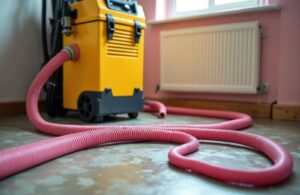
Start by using a submersible pump for larger volumes of water; it quickly drains the affected area. For smaller spaces, wet vacuums are ideal, as they can extract water from carpets and upholstery without damaging them.
Don’t forget to remove furniture and personal items to prevent further damage. As you move through the process, keep in mind that acting quickly is a key aspect of effective flood recovery strategies.
The longer water sits, the more damage it can cause, leading to mold growth and structural issues. Make sure to monitor moisture levels and prepare for thorough drying after extraction.
With these methods, you’ll restore your space efficiently and effectively, reducing the stress that often accompanies water damage.
Drying and Dehumidifying Affected Areas
When you experience water damage, prompt action is essential to prevent mold growth and structural issues.
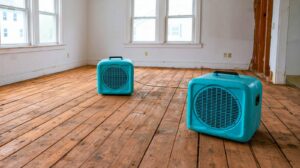
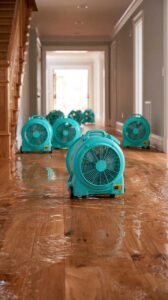
Utilizing the right equipment, like industrial fans and dehumidifiers, can greatly enhance the drying process.
Additionally, regularly monitoring humidity levels ensures that the affected areas dry thoroughly and effectively.
Importance of Prompt Action
While water damage can seem overwhelming, taking prompt action to dry and dehumidify affected areas is essential for minimizing long-term issues. An immediate response helps prevent mold growth and protects your property and belongings.
Start with a rapid assessment to determine the extent of the damage; this will guide your next steps. Make certain that you remove any standing water and begin drying surfaces as soon as possible.
Use fans and open windows to circulate air, promoting evaporation. Dehumidifiers can be invaluable in reducing humidity levels, further accelerating the drying process.
Equipment for Effective Drying
To tackle water damage effectively, having the right equipment is essential.
You’ll want to ensure you have the following tools on hand for efficient drying and dehumidifying:
- Air Movers: These powerful fans circulate air, speeding up the evaporation process and helping to dry out affected areas quickly.
- Dehumidifiers: They reduce humidity levels, preventing mold growth and further damage.
- Moisture Meters: Use these to accurately measure moisture levels in materials, helping you determine when things are dry enough.
- Thermal Imaging Cameras: These can identify hidden moisture pockets behind walls and under floors, ensuring you address all affected areas.
Monitoring Humidity Levels
After setting up your drying equipment, monitoring humidity levels becomes vital in ensuring effective drying and dehumidifying of affected areas.
Start by using a reliable hygrometer for accurate moisture measurement. Aim to keep humidity levels between 30-60% for ideal results. Regularly check these levels to track progress—if humidity remains high, adjust your dehumidifiers accordingly to enhance humidity control.
Remember, stagnant air can hinder the drying process, so consider using fans to circulate air. It’s important to maintain a methodical approach; document your findings and adjust your strategy as needed.
This attention to detail helps in restoring your space and fosters a sense of community among those facing similar challenges. You’re not alone in this process.
Mold Prevention Strategies
Mold can develop within 24 to 48 hours in damp environments, making timely prevention essential.
To combat various mold types effectively, you can implement these prevention techniques:
- Control Moisture: Keep indoor humidity levels below 60% using dehumidifiers and ensuring proper ventilation, especially in bathrooms and kitchens.
- Seal Cracks: Inspect your home for any cracks in walls, windows, or foundations. Seal these to prevent moisture intrusion.
- Clean Regularly: Maintain a consistent cleaning schedule, particularly in areas prone to dampness, like basements and attics.
- Use Mold-Resistant Products: When renovating, opt for mold-resistant paints and materials to create a protective barrier.
Repairing Structural Damage
Once you’ve taken steps to prevent mold growth, addressing any existing structural damage is essential for restoring the integrity of your home. Start by evaluating the affected areas to identify any compromised beams, walls, or floors. Using appropriate repair techniques ensures your home maintains its structural integrity.
| Damage Type | Repair Technique |
|---|---|
| Cracked Walls | Fill cracks, apply sealant |
| Warped Beams | Replace or reinforce beams |
| Buckled Flooring | Replace damaged sections |
| Leaky Roof | Patch leaks, replace shingles |
| Foundation Cracks | Inject epoxy or mortar |
For effective repairs, consider hiring professionals who specialize in structural restoration. They’ll help you choose the right materials and methods tailored to your home’s specific needs. Remember, taking prompt action will enhance safety and restore your sense of belonging in your cherished space.
Cleaning and Sanitizing Surfaces
As you tackle water damage restoration, cleaning and sanitizing surfaces is an essential step that shouldn’t be overlooked. Proper surface cleaning and effective sanitization techniques help prevent mold growth and ensure a safe environment.
Here’s a methodical approach to get you started:
- Remove Debris: Clear away any dirt, mud, or debris from affected surfaces.
- Apply Cleaning Solution: Use a mixture of water and a safe cleaning agent suitable for the surface material.
- Scrub Surfaces: Employ a scrub brush or cloth to thoroughly clean surfaces, focusing on crevices and edges.
- Sanitize: After cleaning, apply a sanitizing solution to eliminate remaining bacteria and viruses.
Following these steps ensures your surfaces are clean and safe.
Working With Professional Restoration Services
When facing water damage, enlisting the help of professional restoration services can make all the difference in the recovery process.
It’s vital to start by choosing services with a solid reputation. Look for companies that specialize in water damage restoration and have positive customer reviews. Don’t hesitate to ask for references; trusted professionals will gladly provide them.
Once you’ve narrowed down your options, comparing quotes is important. Request detailed estimates that outline the scope of work, timelines, and materials involved. This helps you understand the financial commitment and clarifies what each service includes.
Additionally, ensure the professionals you choose are licensed and insured. This protects you from potential liabilities during the restoration process.
Wrap-Up
In the world of water damage restoration, think of yourself as a skilled captain maneuvering a stormy sea. Quick action and the right tools—like pumps and vacuums—can steer you clear of disaster. Just as a ship requires a sturdy hull to withstand waves, your home needs thorough drying and mold prevention to remain safe. By following these steps and partnering with professionals, you ensure a smoother voyage back to normalcy, protecting your haven from future storms.