Structural Drying After Damage is a critical step in preventing long-term problems after water intrusion. Hidden moisture can continue spreading through framing, subfloors, and wall cavities even after visible water has been removed. The process begins with water extraction, followed by opening affected areas when necessary and using professional air movers, dehumidifiers, and moisture detection equipment to control the drying process. Monitoring moisture levels throughout restoration helps identify remaining damp areas, reduce the risk of mold growth, and protect the structural integrity of your property.
Key Takeaways
- Act quickly to limit moisture spread and reduce secondary damage.
- Remove standing water with pumps, wet vacs, and extractors.
- Open walls and floors to expose hidden moisture and speed drying.
- Position air movers and dehumidifiers for steady, even airflow.
- Monitor moisture levels regularly and keep humidity below 60% to prevent mold.
Why Speed Matters in Structural Drying
When you start structural drying quickly, you limit how far moisture can spread and reduce the chance of secondary damage.
You protect drywall, framing, and finishes before they absorb deeper, making recovery faster and more predictable. Fast action also supports better drying techniques because materials respond more evenly when they haven’t stayed wet for long.
You’ll get more reliable moisture measurement early, so you can track progress and adjust equipment before hidden dampness lingers.
In your restoration team, speed helps everyone work from the same data and stay aligned on the goal: return the structure to safe, dry conditions.
When you move promptly, you don’t just save materials—you help create a smoother, more confident path back to normal.
Remove Standing Water First
Before you dry walls, floors, or framing, you need to remove any standing water. Use proven water extraction methods such as submersible pumps, wet vacs, and truck-mounted extractors to pull moisture fast and reduce saturation.
You’ll lower standing water hazards, including slip risks, sewage exposure, and material deterioration. Start in the deepest areas and work toward exits so you don’t spread contamination.
Empty containment areas often, and check hidden pockets under debris or furniture. If you stay organized and keep moving, you’ll support the whole crew’s drying effort and protect the structure from further damage.
Once the water’s gone, you can assess what still needs cleanup, but don’t leave pools behind.
Open Walls and Floors for Airflow
Next, open up walls and floors so trapped moisture can escape and air can move through the structure. You’ll speed drying by removing baseboards, cutting inspection holes, and lifting affected flooring where safe.
Expose wet cavities so you can check framing, insulation, and subflooring for hidden damage. Good air circulation starts when you give the structure clear pathways, not when you seal damp materials in place.
Use careful wall treatment: remove soaked drywall, detach wet trim, and protect clean finishes from unnecessary damage. Keep your cuts neat, label sections, and stay organized so you and your crew can work as one.
When you open the assembly correctly, you help the entire team dry faster, reduce odors, and lower the chance of future failure.
Use Dehumidifiers and Air Movers
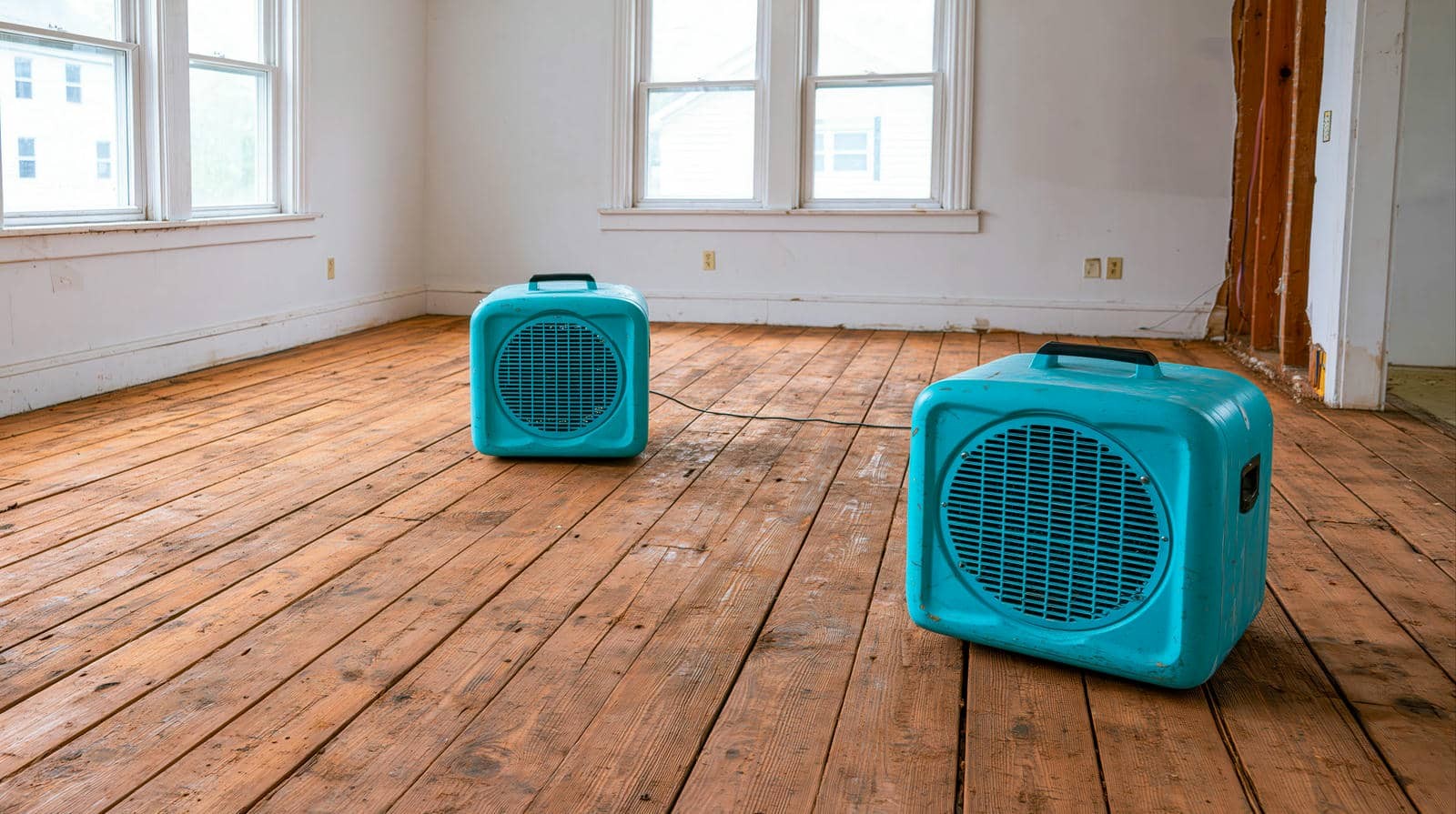
Once you’ve opened the structure, place dehumidifiers and air movers where they can work together to pull moisture out of the air and move it off wet surfaces.
Choose dehumidifier types based on room temperature and load; refrigerant units fit warmer spaces, while desiccant models perform better in cooler conditions.
Set the units so dry air circulates across the largest exposed areas, and keep returns and exhausts clear.
For air mover placement, aim the flow across floors, walls, and trim, not straight at one spot. You want steady, even evaporation, not surface damage.
Check cords, drainage, and filters so the system runs without interruption.
When you coordinate equipment well, you speed drying, protect materials, and keep the jobsite working like a team.
Check Moisture in Wall Cavities and Subfloors
Use a moisture meter to check wall cavities and subfloors, not just visible surfaces, because trapped water often lingers behind drywall, under trim, and beneath flooring.
You’ll catch hidden pockets early when you compare readings from dry areas to damp ones. Use moisture meters in a grid pattern, then confirm suspicious zones with thermal imaging to spot cooler, wetter areas that may be joining your drying plan.
Probe baseboards, outlet-adjacent cavities, and seams where water can travel. Log each reading so you can track progress and avoid guesswork.
When levels stay elevated, keep monitoring and adjust your equipment placement. Staying methodical helps you protect the structure, work with confidence, and move through the restoration process as a team.
Dry Insulation, Subfloors, and Framing
After you’ve mapped moisture in cavities and subfloors, dry the materials that hold it most stubbornly.
Pull wet insulation materials only when they’re saturated or damaged; otherwise, keep them in place and drive air through the cavity.
Open access points at the top and bottom so you can move dry air across framing members and underlayment.
If moisture barriers are intact, expose both sides where possible to speed release.
Use low-grain dehumidification, air movers, and controlled heat to dry subfloors evenly, not just the surface.
- Lift baseboards to vent wall edges.
- Drill small inspection holes for airflow.
- Check framing, joists, and seams daily.
You’re part of a crew that dries cleanly, measures often, and restores structure with confidence.
Prevent Mold While Structural Drying
To prevent mold during structural drying, you need to lower moisture fast enough that materials don’t stay in the growth range for long. Measure humidity, temperature, and material moisture daily, and keep affected areas below 60% RH when possible.
Use air movers to strip surface moisture, and pair them with dehumidifiers sized for the space. Open crawlspace vents or windows only when outdoor air supports drying; otherwise, close the building and control conditions inside. These ventilation strategies help you protect framing, drywall, and subfloors.
Remove wet contents, isolate damp areas, and clean visible contamination right away. Good mold prevention depends on speed, airflow, and monitoring. If you stay consistent, your crew can dry safely and keep the structure healthier for everyone.
Frequently Asked Questions
How Do I Know if My Drywall Needs Replacement?
You’ll know your drywall needs replacement if it’s swollen, crumbling, stained, or soft after a drywall inspection and moisture assessment. If it stays damp, smells musty, or sags, you should replace it.
What Insurance Documentation Is Best for a Drying Claim?
You’ll win the claim process with photos, moisture logs, drying reports, invoices, and adjuster notes—because insurers adore a paper trail almost as much as they adore delays. Keep documentation types organized, dated, and complete.
Can Structural Drying Be Done During Cold Weather?
Yes, you can dry structurally in cold weather if you control moisture, use insulation impact wisely, and adjust drying techniques. You’ll need warmer air, sealed spaces, and steady monitoring so your team stays effective.
Should I Move Furniture Before Drying Begins?
Yes—you should move furniture before drying begins; hidden moisture stays trapped when items sit tight to walls. You’ll improve furniture placement, let drying equipment reach surfaces, and speed drying while protecting your space.
When Is It Safe to Restore Electricity After Water Damage?
You can restore electricity only after a qualified electrician confirms electrical safety and your restoration timeline shows all wiring, outlets, and panels are dry, undamaged, and tested. You’ll protect your crew and keep recovery moving.
Recap
When you dry a structure fast, you do more than remove water—you restore control. Each pump, air mover, and meter becomes a lantern in the dark, guiding you through hidden moisture in walls, floors, and framing. Keep checking, keep adjusting, and keep the space open to airflow. That’s how you stop mold before it starts. In structural drying, speed and precision work together, turning damage into recovery and uncertainty into a dry, stable finish.