After a storm, you may spot missing shingles and a water stain spreading across the ceiling. Roof leak damage should be addressed by inspecting the roof quickly, covering exposed areas, and checking walls, ceilings, and the attic for hidden moisture. Then dry the affected space before mold has a chance to develop. The real challenge is knowing what damage is still hidden and which repairs need to happen first.
Key Takeaways
- Inspect the roof from the ground or a safe vantage point for missing shingles, dents, lifted flashing, and other storm damage.
- Photograph all visible damage before disturbing anything, and avoid climbing onto wet, unstable, or unsafe roofs.
- Tarp the damaged area temporarily, extending at least 3 feet beyond the leak and securing edges tightly to stop further water intrusion.
- Check ceilings, walls, and the attic for moisture, then dry the space quickly with fans, dehumidifiers, and removed wet materials.
- Repair the roof and interior damage promptly, and call a licensed roofer or restoration team for extensive or unsafe damage.
Inspect Storm Roof Damage First
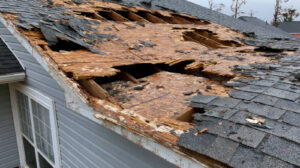
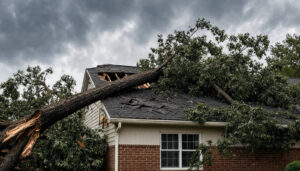
Before you enter the home, inspect the roof for visible storm damage from the ground or a safe vantage point. Use binoculars if needed, and look for missing shingles, lifted flashing, punctures, dents, and displaced ridge caps.
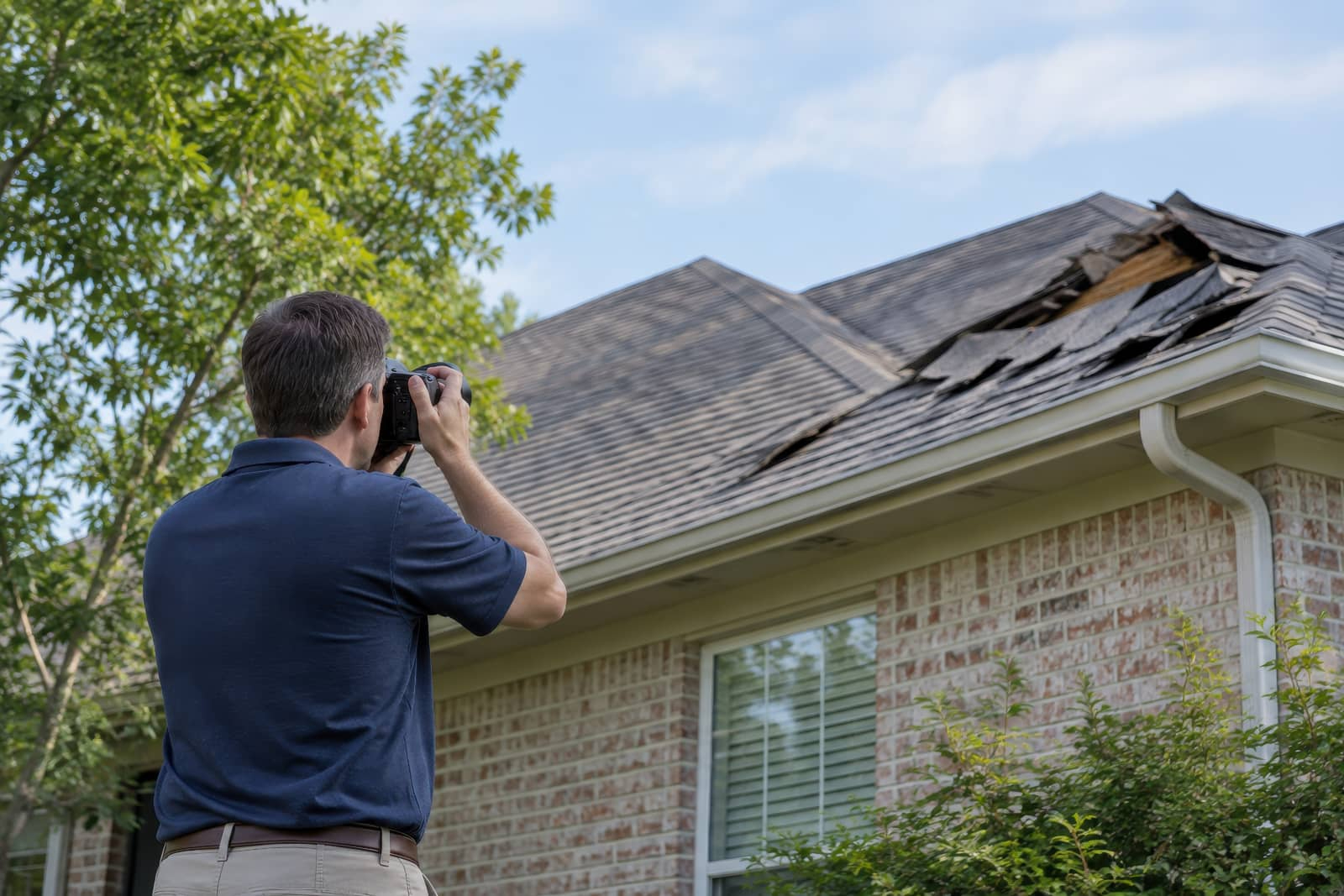
Check gutters, vents, chimneys, and skylights for impact marks or debris that could signal roof leak damage after a major storm. Photograph every defect before anyone disturbs the scene.
If you spot sagging, downed lines, or structural movement, keep your distance and call a licensed roofer or emergency responder. You’re part of the smart response team when you document conditions accurately, note dates and weather, and avoid climbing on a wet or unstable roof.
Careful inspection helps you protect your home and guide the next repair steps.
Tarp the Roof and Stop Leaks
Once you’ve documented the damage, move quickly to stop active water intrusion with an emergency tarp.
Choose a tarp that extends at least 3 feet beyond the damaged area and secure it with 1×3 battens and roofing nails into sound decking.
Overlap seams downhill so water sheds cleanly, and anchor all edges tightly to prevent wind lift.
If you can’t reach the roof safely, call a licensed roofer or storm response crew now.
- You protect your home before the next squall hits.
- You reduce the chance of hidden structural decay.
- You keep your family’s space safer and more livable.
- You buy time for a proper repair plan.
- You act like a prepared homeowner, not a victim.
Don’t rely on plastic alone; it tears fast and leaves your roof exposed.
Check Walls, Ceilings, and Attic Moisture
With the roof temporarily secured, inspect the interior for moisture intrusion at the walls, ceilings, and attic framing.
Look for staining, bubbling paint, sagging drywall, and soft spots near vents, chimneys, and exterior intersections.
In the attic, check rafters, sheathing, insulation, and fasteners for dampness, discoloration, or active dripping.
Use a flashlight and, if you have one, a moisture meter to confirm hidden wet areas behind finishes.
Mark each affected location so you can track the leak path and report it accurately.
You’re not just checking damage; you’re protecting your home’s structure and your family’s comfort.
If moisture appears widespread or electrical fixtures are involved, shut off power to the affected circuit and document the conditions for repair.
Dry Out the Space Before Mold Forms
As soon as you’ve identified wet areas, dry them out fast to stop mold from taking hold. Open windows if weather permits, run fans to move air across damp surfaces, and use a dehumidifier to pull moisture from the room.
Keep HVAC vents clear so airflow reaches corners, closets, and attic access points. Remove soaked rugs, cardboard, and other porous items that trap water.
Check humidity with a meter; keep it below 60%, ideally near 50%. Drying should begin within 24 to 48 hours, because mold can colonize quickly.
- You protect your home’s health.
- You reduce that heavy, musty stress.
- You restore control when everything feels off.
- You help your household feel safe again.
- You stand with neighbors who act fast.
Repair Roof and Interior Damage
After the structure is dry and you’ve confirmed there’s no hidden moisture, repair the roof first to stop further water intrusion. Replace damaged shingles, underlayment, flashing, and sealants, and verify that fasteners sit flush and penetrations are watertight.
If decking is soft, swollen, or delaminated, cut out the compromised sections and install matching material.
Inside, remove stained drywall, insulation, and trim that can’t be restored, then patch framing, tape seams, and repaint with moisture-resistant products. You’ll protect the rest of your home by restoring every affected layer in order.
If the damage is extensive, work with a licensed roofer and a qualified restoration team so your repairs meet code and your household can settle back in with confidence.
Frequently Asked Questions
How Do I Document Roof Damage for an Insurance Claim?
You should photograph every damaged area, note dates, times, weather, and affected materials, keep receipts, and secure a roofer’s inspection report. You’ll strengthen your claim by organizing evidence chronologically and submitting copies promptly.
Should I Contact My Insurer Before Any Temporary Repairs?
Yes—call your insurer first, before you patch the wound in your roof. You’ll protect coverage, follow claim rules, and keep your repair crew aligned. Then you can tarp, document, and dry fast.
Can I Stay in My Home After a Major Roof Leak?
Yes, you can stay if the leak’s contained, electrical systems are dry, and ceilings are stable; otherwise, leave immediately. You should ventilate, document damage, and arrange emergency tarping, moisture inspection, drying, and repairs.
What Storm Damage Repairs Are Covered by Homeowners Insurance?
You’ll usually get coverage for wind, hail, lightning, fallen trees, and rain intrusion from storm-created openings. You may also recover interior water damage, temporary repairs, and debris removal, but wear, neglect, and flood aren’t covered.
How Long Does a Roof Leak Claim Usually Take to Settle?
Usually, you’ll settle a roof leak claim in 2–6 weeks, though major storm claims can take longer. You should document damage, respond fast, and stay in touch with your adjuster to keep things moving.
Summary
You’ve inspected the roof, and the damage is clear, but the next hours matter most. Secure the tarp, stop the leak, and trace every damp spot in your walls, ceilings, and attic before hidden water spreads. Then dry the space fast with fans and a dehumidifier, or mold can take hold. Finally, bring in a licensed roofer to repair the roof and restore the interior—because one missed leak can become a much bigger failure.