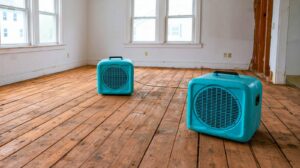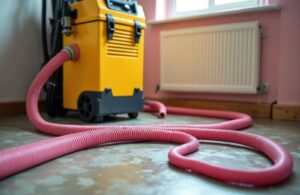
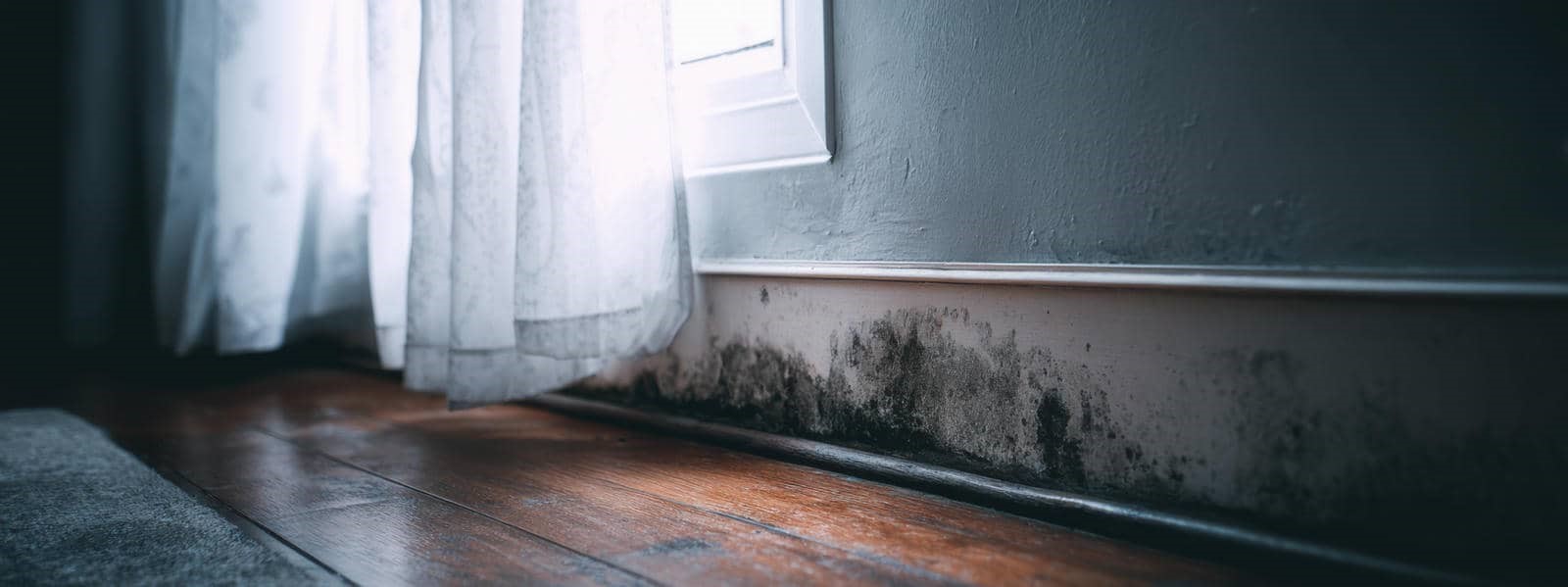
You step into a room where the floor still glistens with floodwater, and the air feels heavy with damp. Act fast: remove standing water and saturated materials, then open windows, run fans, and use dehumidifiers to keep humidity below 60%. Next, wash affected surfaces with soap and water, then apply an EPA-registered disinfectant. One missed mold cleanup step can let mold return, so the next move matters.
Key Takeaways
- Shut off standing water, open windows if dry outside, and run fans or dehumidifiers to keep humidity below 60%.
- Remove wet rugs, fabrics, paper, carpet padding, drywall, insulation, and ceiling tiles to stop mold from spreading.
- Wear gloves, an N95 respirator, and eye protection while bagging and sealing contaminated debris for disposal.
- Clean hard surfaces with soap and water, then use an EPA-registered disinfectant labeled for mold or flood cleanup.
- Monitor hidden cavities and surfaces daily, drying them fully and checking moisture levels until they match dry areas.
Stop Mold Growth After Flooding
As soon as the floodwater recedes, you need to act fast to stop mold from taking hold. Shut off standing water sources, open windows if outdoor humidity is lower, and run fans and dehumidifiers to lower indoor relative humidity below 60%.
Remove wet rugs, fabrics, and paper items from the area so spores don’t spread. Check hidden cavities, baseboards, and under sinks for dampness, because mold can colonize within 24 to 48 hours.
Bag contaminated debris promptly and seal it before disposal. Wear gloves, an N95 respirator, and eye protection to protect yourself and your team.
Maintain continuous moisture control, monitor surfaces daily, and document wet zones. These mold prevention steps help your household recover together and reduce the chance of recurring contamination.
Dry Out and Remove Damaged Materials
Pull out soaked drywall, insulation, carpet padding, and ceiling tiles, because these materials dry too slowly and can keep feeding mold.
After water extraction, use fans and dehumidifiers to drive down moisture fast. Do a material assessment on every affected surface and separate what you can save from what you must discard. You’re not alone in this process; work methodically with your team and mark each area clearly.
- Remove porous items that stayed wet more than 24 to 48 hours.
- Stack salvageable framing pieces with airflow around them.
- Bag debris immediately to limit spread through the home.
Keep checking moisture with a meter until readings match dry areas. If hidden cavities stay damp, open them so air can reach in and help you finish the job.
Clean and Disinfect to Prevent Future Mold Growth
Once the area is dry and the damaged materials are gone, clean hard surfaces with soap and water to remove dirt and residue. Then apply an EPA-registered disinfectant labeled for mold or flood cleanup.
You should follow the label exactly, including contact time, dilution, and ventilation requirements. Use gloves, eye protection, and a fitted mask if aerosols may form.
Scrub seams, corners, and porous surface edges where spores can linger. Rinse if the product requires it, and dry the area completely.
Choose effective disinfectants that match the surface and contamination level, because not every cleaner kills mold.
These mold prevention tips help you protect your space, restore safe conditions, and keep your home or team aligned around a clean recovery routine.
Frequently Asked Questions
How Soon Should Insurance Claims Be Filed After Flood Mold Damage?
You should file insurance claims immediately after flood mold damage, ideally within 24 to 72 hours, because your insurance coverage and filing timeline can tighten fast. You’ll protect your claim and stay aligned with your policy.
When Is Professional Mold Testing Necessary After Flooding?
You need professional mold testing if flooding soaked hidden spaces, odors linger, visible growth appears, or occupants feel symptoms. It verifies indoor air quality, guides mold prevention strategies, and helps you protect your household confidently.
Can Belongings in Sealed Plastic Containers Still Develop Mold?
Yes, you can still get mold growth in sealed plastic containers if moisture was trapped inside or container materials degraded. You should inspect seals, dry contents, and replace compromised containers promptly to protect belongings.
How Do I Document Flood Damage for a Home Inspection?
Photograph wet drywall beside dry flooring, then date-stamp each image. Use your inspection checklist to record flood damage, note mold types, keep receipts for repair estimates, and save everything for insurance coverage and prevention tips.
What Safety Gear Is Best for Handling Contaminated Floodwater?
You should wear waterproof boots, nitrile gloves, goggles, and an N95 or P100 respirator; these protect you from floodwater hazards and support mold prevention tips. Add coveralls, then wash gear immediately after use.
Wrap-Up
After flooding, you can halt mold’s spread by acting fast, like clearing storm clouds before they settle. Remove standing water and any soaked materials, then open windows, run fans, and use dehumidifiers to keep indoor humidity below 60%. Next, scrub affected surfaces with soap and water, then apply an EPA-registered disinfectant. Keep checking moisture daily, and teach everyone involved the prevention steps so your home stays dry, safe, and mold-free.