When water damage strikes your commercial property, every second counts. You need to act quickly to minimize losses and ensure a swift recovery. Understanding the types of water damage is essential, as is knowing the immediate steps to take. From evaluating the extent of the damage to engaging professional restoration services, each decision impacts your recovery timeline. But what’s the best way to choose the right restoration company for your specific needs?
Key Takeaways
- Assess the extent of water damage immediately to identify necessary restoration actions and potential hazards.
- Contact professional restoration services 24/7 for efficient water extraction and damage mitigation.
- Document all damage with photos for insurance claims and recovery planning.
- Implement mold prevention strategies promptly to avoid long-term health risks and property damage.
- Develop a comprehensive emergency response plan to ensure preparedness for future water damage events.
Understanding Water Damage Types
When dealing with commercial water damage, it’s crucial to understand the various types that can impact your property. Water damage classification typically falls into three categories: clean water, gray water, and black water.
Clean water comes from a clean source, like a broken pipe, and poses minimal risk. Gray water contains contaminants from sources such as washing machines, requiring careful handling. Black water, often from sewage or flooding, is highly hazardous and demands immediate attention.
To effectively protect your business, implement robust mitigation strategies tailored to each water damage type. For clean water incidents, swift removal and drying can prevent mold growth.
For gray water, ensure proper sanitation and filtration during cleanup. When facing black water, enlist professional restoration services to manage hazardous materials safely.
Immediate Steps to Take After Water Damage
Following any type of water damage, swift action is essential to minimize further complications and restore your commercial space.
First, ascertain everyone’s safety by shutting off the electricity and gas supply if needed. Next, contact your emergency contacts—whether it’s a restoration company, plumber, or insurance agent—immediately. Their expertise will guide you through the recovery process.
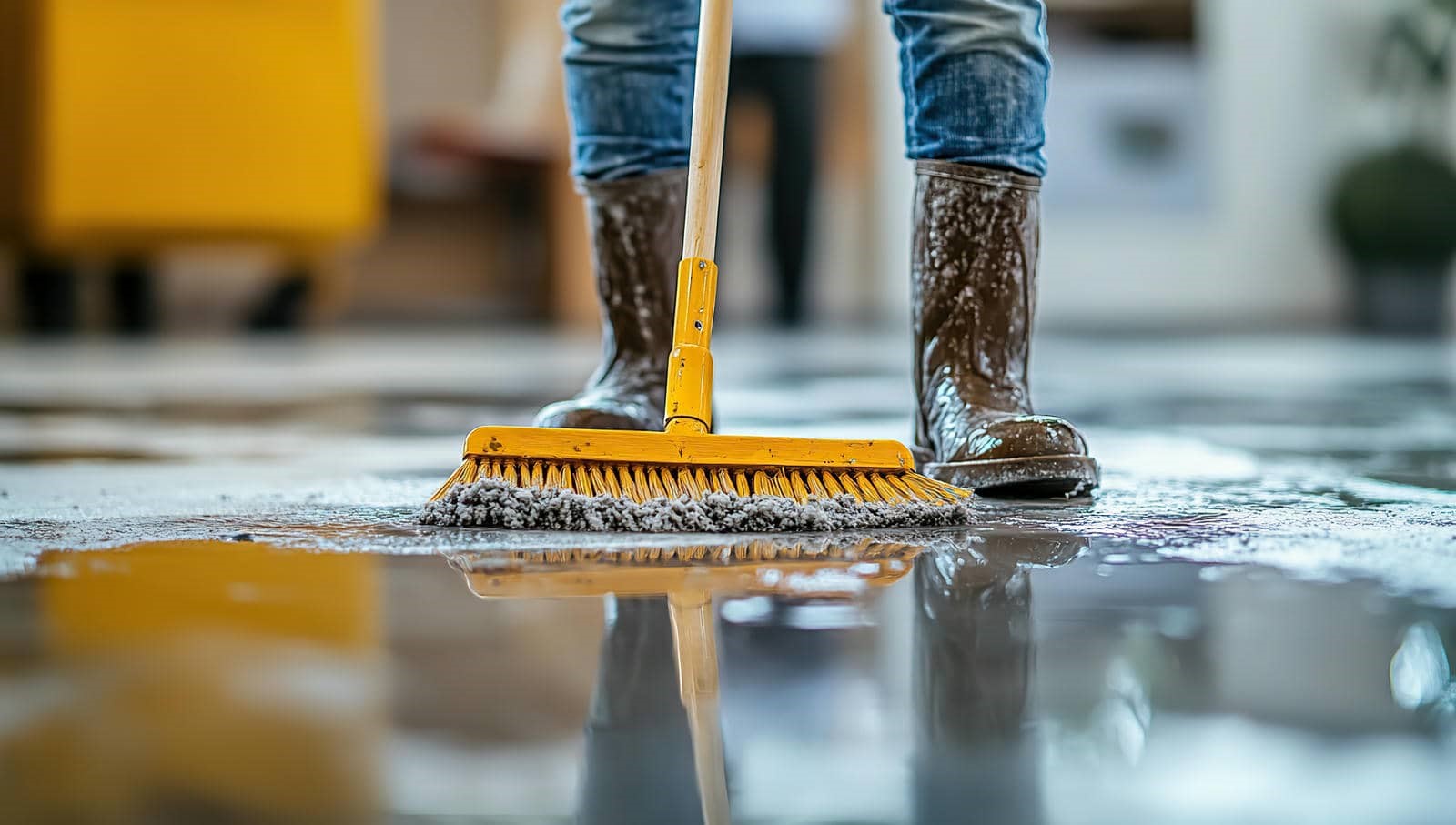
Once you’re in touch with professionals, begin water extraction. If it’s safe, use wet vacuums or pumps to remove standing water. This step is critical to prevent mold growth and further structural damage. Document the damage with photos for insurance purposes.
After the water has been extracted, ventilate the area by opening windows and using fans to promote air circulation. This helps in drying out the space quickly.
Assessing the Extent of Water Damage
To assess the extent of water damage, start with an initial inspection of the affected areas.
Look for visible signs of water intrusion, such as discoloration, mold growth, and structural integrity issues.
Identifying these areas quickly will help you prioritize your recovery efforts and mitigate further damage.
Initial Inspection Process
The initial inspection process is vital for accurately evaluating the extent of water damage in a commercial property. Start with a thorough initial assessment, identifying visible signs of water intrusion, such as discoloration, mold, or structural deformities.
Use moisture meters to determine hidden dampness in walls and floors. Document all findings meticulously, as this damage evaluation will guide your recovery strategy.
Check for potential hazards, such as electrical risks or compromised structural integrity, and prioritize safety. Engage relevant stakeholders, fostering a sense of community and collaboration in addressing the issue.
Identifying Affected Areas
As you assess the extent of water damage in a commercial property, it’s essential to methodically identify all affected areas.
Start by locating the initial water sources—pipes, roofs, or appliances—before expanding your search. Use moisture detection tools to pinpoint damp spots and hidden moisture behind walls or under flooring.
Pay special attention to basements, crawl spaces, and corners, as these areas often harbor water damage that’s not immediately visible.
Document each affected area with clear notes and photos, which will help in formulating a recovery plan.
Professional Water Damage Restoration Services
When water damage strikes your commercial property, swift and expert restoration services become essential to minimize loss and restore functionality.
Professional restoration teams employ advanced water extraction and drying techniques, ensuring every affected area receives meticulous attention. They assess the extent of the damage, utilizing specialized equipment like moisture detectors and industrial fans to expedite the drying process.
Their expertise in water damage restoration techniques allows them to identify hidden moisture pockets, preventing future complications. You’ll appreciate their ability to work efficiently, often within hours, to return your space to a safe and operational condition.
Moreover, these professionals are trained to handle various materials and property types, ensuring tailored solutions for your unique situation.
Mold Prevention and Treatment
To effectively manage mold in your commercial space, you’ll need to identify its growth early, using tools like moisture meters and visual inspections.
Once detected, applying targeted mold treatments will eliminate existing spores, but it’s essential to implement long-term prevention strategies to guard against future infestations.
Identifying Mold Growth
Mold growth can quickly escalate into a serious issue if left unchecked, making it crucial to identify its presence early.
Start by inspecting areas prone to moisture, such as bathrooms, kitchens, and basements. Look for visible signs of mold types like black mold or mildew, which can appear as dark spots or fuzzy patches.
Don’t forget to check behind wallpaper or under carpets, as hidden mold can pose significant health risks, including respiratory issues and allergic reactions.
Use a moisture meter to detect damp areas, and trust your instincts—if you smell a musty odor, investigate further.
The sooner you identify mold growth, the better equipped you’ll be to address it effectively, protecting both your health and property.
Effective Mold Treatment
Since effective mold treatment hinges on both prevention and remediation, addressing moisture control is your first step.
Make certain that leaks are fixed and humidity levels are kept between 30-60%. For mold removal, use EPA-approved products to eliminate existing growth. Scrub surfaces with a mixture of water and detergent, and don’t forget to wear protective gear.
After removal, consider implementing air purification systems equipped with HEPA filters. These systems help trap airborne spores, preventing future infestations.
Regularly inspect areas prone to dampness, like basements and bathrooms, to catch potential issues early.
Long-term Prevention Strategies
While it’s crucial to address existing mold issues, implementing long-term prevention strategies can considerably reduce the risk of future outbreaks.
Here are three key strategies to take into account:
Waterproofing Systems: Invest in high-quality waterproofing systems for your building. This will create a barrier against moisture intrusion, which is a primary mold growth catalyst.
Drain Maintenance: Regularly inspect and maintain drainage systems to verify they’re functioning correctly. Clogged drains can lead to water accumulation, increasing mold risk.
Humidity Control: Keep indoor humidity levels between 30-60%. Use dehumidifiers in damp areas to maintain ideal conditions that deter mold growth.
Insurance Claims and Documentation
When dealing with commercial water damage recovery, understanding the intricacies of insurance claims and documentation is essential. First, gather all relevant insurance documentation, including your policy details and any previous claims. This will streamline the claim process, allowing you to present a thorough case to your insurer.
Next, document the damage thoroughly. Take clear photos and videos of affected areas and items, and list all damaged property with estimated replacement costs. This evidence strengthens your claim and minimizes delays.
After compiling your documentation, contact your insurance company to initiate the claim process. Be prepared to provide detailed accounts of the incident and the damage incurred.
Maintain communication with your adjuster, and don’t hesitate to ask questions if you’re unsure about any step.
Long-Term Recovery and Prevention Strategies
To effectively navigate the long-term recovery from commercial water damage, it’s crucial to implement a strategic plan that addresses both immediate needs and future prevention.
Here are three key strategies for effective water damage mitigation and restoration planning:
Conduct Regular Inspections: Schedule routine assessments of your property to identify potential vulnerabilities. Early detection can save time and resources.
Invest in Advanced Technology: Utilize moisture detection systems and flood barriers to minimize the risk of future incidents. These tools enhance your preparedness and response capabilities.
Develop a Thorough Emergency Response Plan: Ensure your team is trained and aware of protocols during a water damage event. A well-defined plan fosters confidence and quick action, reducing downtime.
Choosing the Right Restoration Company
Choosing the right restoration company is essential for minimizing the impact of water damage on your commercial property, especially since the quality of service can greatly influence recovery outcomes.
Start by checking for restoration certifications, which indicate a company’s adherence to industry standards and best practices. A certified team is more likely to deliver effective results, ensuring your property is restored efficiently.
Next, read company reviews to gauge past performance. Look for feedback that highlights their responsiveness, professionalism, and quality of work. Positive reviews from other businesses can provide you with a sense of trust and belonging within your community.
Finally, don’t hesitate to ask for references or case studies. A reputable restoration company should be willing to share their successes, helping you feel confident in your choice.
Frequently Asked Questions
How Long Does the Water Damage Restoration Process Typically Take?
The water damage restoration process typically takes several days to weeks, depending on the extent of damage. Effective drying techniques can expedite the restoration timeline, ensuring your space returns to normal as quickly as possible.
Can I Stay in My Commercial Property During Restoration?
You may need to temporarily vacate your commercial property during restoration to ensure safety. Follow occupancy guidelines provided by professionals, as they prioritize your well-being while effectively addressing the water damage situation. Your safety matters most.
What Equipment Is Used in Water Damage Restoration?
In water damage restoration, you’ll use water extraction pumps to remove excess water quickly, followed by drying equipment like dehumidifiers and air movers to ensure thorough moisture removal and prevent mold growth effectively.
How Can I Prevent Future Water Damage Incidents?
You can install water detection systems and proper drainage solutions to monitor leaks and redirect water, considerably reducing the risk of future incidents and ensuring your property’s safety.
What Are the Signs of Hidden Water Damage?
You’ll notice signs of hidden water damage like mold growth, musty odors, and warped materials. These issues can compromise your property’s structural integrity, so it’s essential to investigate and address any potential water intrusion promptly.
Conclusion
In the blink of an eye, water can wreak havoc on your business, turning a thriving environment into a disaster zone. But don’t let panic take over—swift action and expert intervention can turn the tide. By following the outlined steps and engaging certified restoration professionals, you can reclaim your space and safeguard against future threats. Remember, every moment counts in water damage recovery, so act now to protect your investment and ensure your business thrives once more!