When it comes to mold remediation, understanding the process is critical. You need to assess the extent of the mold problem before taking any action. Proper personal protective equipment is necessary to ensure safety during the remediation process. Moisture control plays an important role in preventing further growth. By selecting the right removal techniques and implementing preventative measures, you can effectively manage mold issues. Let’s explore these important steps in detail.
Key Takeaways
- Assess the extent of mold growth using inspection tools and document findings for a comprehensive understanding of the situation.
- Always wear appropriate personal protective equipment, including masks, gloves, and goggles, to minimize exposure to mold spores.
- Control moisture by identifying sources of dampness, maintaining humidity levels, and ensuring proper ventilation throughout the space.
- Choose effective mold removal techniques based on the severity of the infestation, utilizing both chemical and natural remedies as needed.
- Implement preventative measures such as using mold-resistant materials and conducting regular inspections to avoid future mold growth.
Assess the Extent of Mold Growth
Before you start any mold remediation process, it’s crucial to evaluate the extent of mold growth in your space.
Begin by employing effective mold identification techniques to determine the type and severity of the infestation. Look for visible signs such as discoloration on walls or ceilings, and be aware of any musty odors that may indicate hidden mold.
Utilize inspection tools like moisture meters and infrared cameras to detect moisture levels and temperature variations, which can reveal mold-prone areas.
Conduct a thorough inspection of potential problem areas, including basements, attics, and around plumbing fixtures. Document your findings to create a detailed overview of the mold situation.
Use Proper Personal Protective Equipment
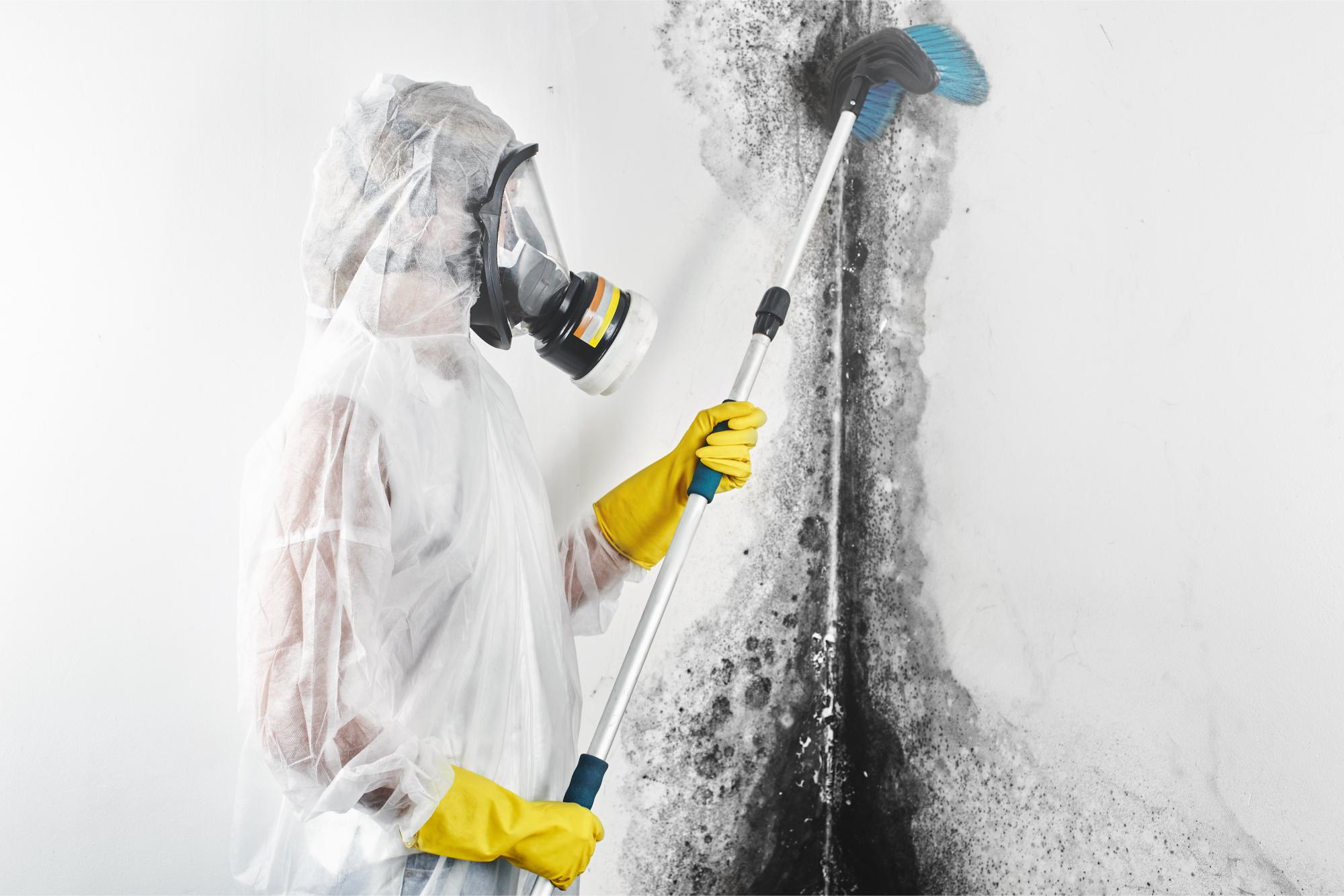
When tackling mold remediation, wearing proper personal protective equipment (PPE) is essential to secure your safety.
Start by donning high-quality protective clothing, such as coveralls, gloves, and booties, to shield your skin from mold spores and allergens. These barriers prevent direct contact and minimize the risk of inhaling harmful particles.
Next, don a reliable respiratory mask, preferably an N95 or higher-rated respirator, to filter out airborne spores. Confirm it fits snugly to avoid any gaps that could allow contamination.
Wear goggles to protect your eyes from irritation and further exposure.
Employ Effective Moisture Control Strategies
To effectively combat mold growth, you must prioritize moisture control strategies, as excess humidity creates an ideal environment for mold spores to thrive.
Start by identifying moisture sources in your space, such as leaks, condensation, or poor ventilation. Address these issues immediately to prevent mold from taking hold.
Implement humidity control measures by maintaining indoor humidity levels between 30% and 60%. Use dehumidifiers in damp areas and ensure proper ventilation in bathrooms and kitchens.
Regularly inspect and clean your HVAC systems, as they can harbor moisture and contribute to mold growth.
Seal any cracks or gaps in walls and foundations to minimize water intrusion. Additionally, consider using vapor barriers in crawlspaces to further reduce moisture levels.
Select Appropriate Mold Removal Techniques
Selecting appropriate mold removal techniques is essential for effectively eliminating mold and preventing its return. You have two primary options: chemical solutions and natural remedies. Chemical solutions can be highly effective for severe infestations but may pose health risks if not used correctly. On the other hand, natural remedies are often safer and environmentally friendly, though they may require more time and effort.
| Technique | Description |
|---|---|
| Chemical Solutions | Powerful agents like bleach or specialized fungicides. |
| Natural Remedies | Alternatives like vinegar, baking soda, or tea tree oil. |
| Prevention Focus | Techniques aimed at controlling moisture and air quality. |
| Surface Treatment | Methods for cleaning and disinfecting affected areas. |
Implement Preventive Measures to Avoid Recurrence
Preventing mold from returning requires a proactive approach to managing moisture and maintaining air quality in your home.
Start by using mold-resistant materials in areas prone to dampness, like bathrooms and basements. These materials can greatly reduce the likelihood of mold growth, providing long-lasting protection.
Next, ensure proper ventilation throughout your home. Use exhaust fans in kitchens and bathrooms, and consider installing a dehumidifier in humid areas. Controlling humidity levels below 60% can make a considerable difference.
Regular inspections are essential. Make it a habit to check for leaks, water stains, or condensation in hidden spaces such as behind appliances and under sinks.
Address any issues immediately to prevent moisture accumulation.
Wrap-Up
Just like a gardener tends to a wilting plant, you must nurture your environment by addressing mold growth effectively. By evaluating the situation, wearing protective gear, controlling moisture, choosing the right removal methods, and implementing preventative measures, you cultivate a healthy living space. Remember, neglecting the roots of the problem will only lead to a recurring cycle. Invest the time and effort now, and you’ll reap the rewards of a mold-free sanctuary for years to come.