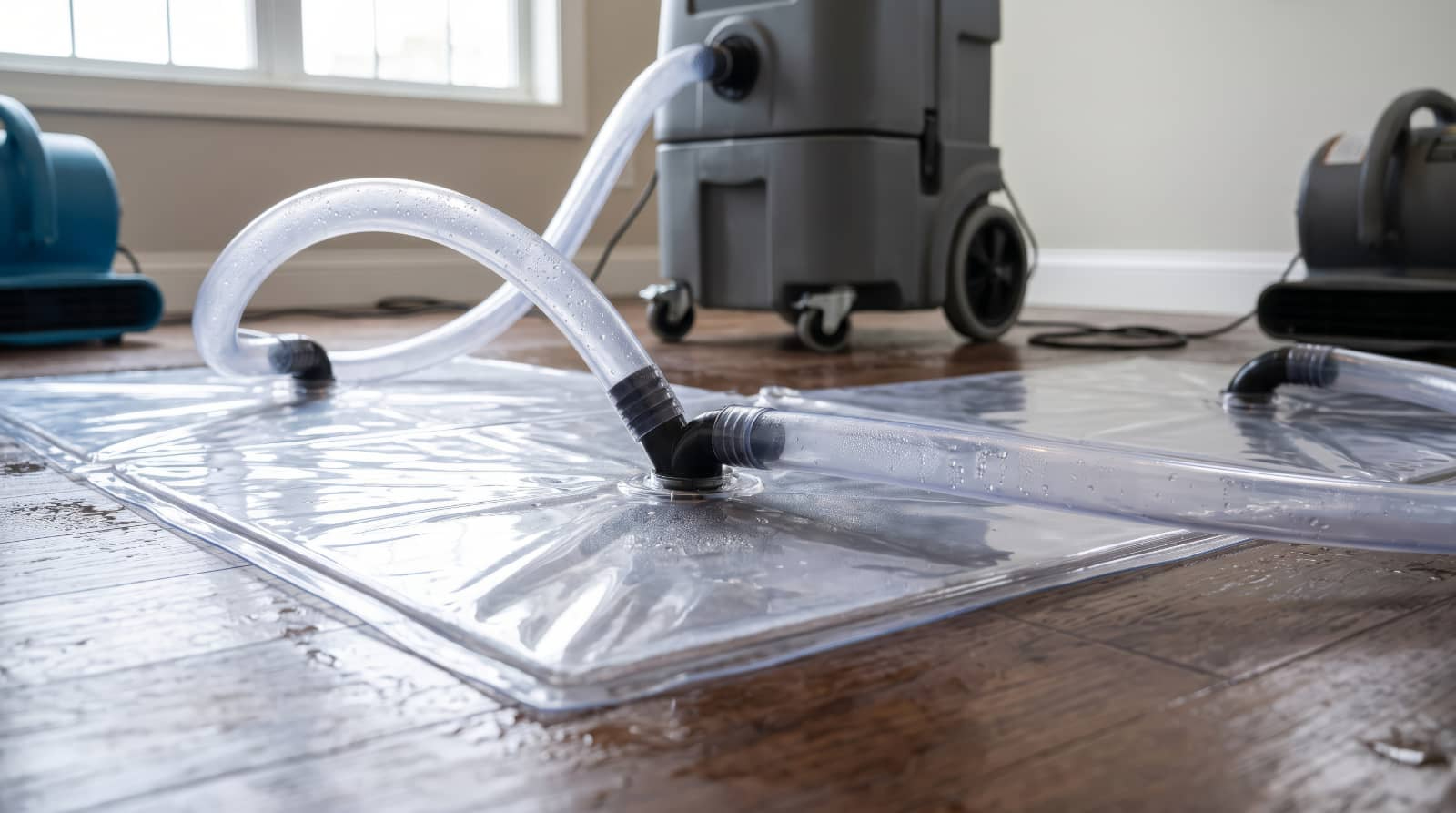
When you look inside professional water extraction equipment, you see more than a wet vacuum at work. You’re dealing with high-capacity pumps, targeted suction, and moisture meters that expose what the eye can’t catch. Each tool serves a specific loss condition, from standing water to hidden saturation. The real question is how these systems coordinate so quickly, and why the wrong setup can slow recovery more than the water itself.
Key Takeaways
- Professionals use high-capacity vacuums, submersible pumps, and weighted extractors to remove standing water fast.
- The right tool depends on water depth, surface type, and access conditions for efficient extraction.
- Moisture meters, hygrometers, and thermal cameras detect hidden dampness behind walls and under flooring.
- Air movers and dehumidifiers speed drying by reducing surface moisture and vapor pressure.
- Equipment choice also depends on loss category, with contaminated water requiring stronger containment and disposal controls.
Professional Water Extraction Equipment
Professional water extraction equipment is designed to remove standing water quickly, detect hidden moisture in materials, and speed up structural drying after a loss event.
You rely on water extraction equipment used by professionals when you need measurable control over a wet environment. You’ll see high-capacity vacuums, submersible pumps, moisture meters, and air movers working as a coordinated system.
Each tool serves a specific function, so you can isolate saturated zones, verify concealed dampness, and target drying with precision. This setup helps you stay aligned with a trained restoration crew that values accuracy, accountability, and efficient results.
When you choose professional-grade equipment, you’re joining a process built on standards, not guesswork, and that gives you confidence during a disruptive event.
How Water Extraction Equipment Removes Standing Water
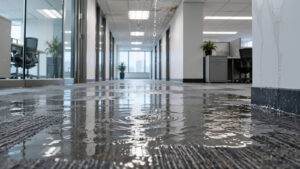
Standing water is removed by matching the right extraction tool to the surface, water depth, and access conditions, then applying controlled suction or pumping to lift water at the source.
You’ll use a wet vacuum for thin films, a submersible pump for deeper pooling, and a squeegee wand or weighted extractor for carpeted areas.
Each tool creates a pressure differential that moves water into a recovery tank or discharge line, reducing dwell time and limiting spread.
You monitor intake rate, hose length, and surface contact so the system keeps pulling efficiently without damaging finishes.
In a professional crew, this process is repeatable, measured, and fast, giving you a clear path from saturation to stabilization.
That’s how you work with the team and restore control.
How Pros Find Hidden Moisture
Even after visible water is removed, you still need to locate moisture trapped in cavities, under flooring, and behind finishes, because hidden dampness drives secondary damage.
You can’t rely on sight alone, so you use calibrated moisture meters, thermal imaging, and hygrometers to map anomalies across materials. Pin meters read conductive surfaces directly; pinless meters scan broader zones without puncturing finishes.
Thermal cameras help you spot cooler areas where evaporation still occurs, while humidity readings tell you whether enclosed spaces remain wet. You compare readings against unaffected reference points, then trace patterns to identify migration paths.
This method lets you work with confidence, align with your crew’s standards, and verify that every affected area’s been documented before remediation advances.
Drying Equipment That Speeds Restoration
Once you’ve mapped hidden moisture, you move to drying equipment that removes residual water and speeds structural recovery.
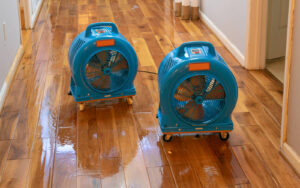
You use air movers to shear damp boundary layers, so surfaces release moisture faster. Dehumidifiers then lower vapor pressure, pulling water out of framing, drywall, and subfloors.
In tight cavities, focused airflow prevents stagnant pockets and supports uniform drying. You monitor progress with moisture meters, because precise readings show whether your setup’s working as intended.
Good placement matters: you want balanced airflow, clear return paths, and enough capacity to keep evaporation ahead of absorption.
When you run the right tools together, you stay in control of the drying curve.
- Air movers
- Low-grain dehumidifiers
- Moisture meters
- Directed airflow paths
- Continuous readings
Choosing Gear by Water Loss Type
Different water loss types call for different equipment, so you size the response to the source, volume, and contamination level before you start drying.
For Category 1 losses, you can usually deploy portable extractors, weighted wands, and sub-surface vacuums to remove clean water fast.
Category 2 losses demand stronger extraction and tighter containment because dissolved contaminants spread easily through carpet, padding, and structure.
Category 3 losses require negative-pressure controls, dedicated disposal, and tools you wouldn’t use on sanitary losses.
If the damage includes concealed moisture, you add thermal imaging, hygrometers, and moisture meters to map wet materials accurately.
When you match gear to the loss class, you work like the pros in your crew: faster, safer, and more consistent on every job.
Frequently Asked Questions
How Often Should Professional Water Extraction Equipment Be Serviced?
You should service professional water extraction equipment at least quarterly, and after every major job, so you catch wear early, maintain suction, verify calibration, and keep your crew’s gear performing reliably.
Can These Machines Safely Run on Generator Power?
Yes, you can run them on generator power, but it’s a tightrope walk: you’ll need a properly sized, clean-sine generator with stable voltage, proper grounding, and enough surge capacity to protect motors, electronics, and drying performance.
What Noise Levels Do Water Extraction Tools Produce?
Water extraction tools usually produce 60–90 dB, so you’ll hear steady fan, pump, and vacuum noise. You’ll want hearing protection, especially in enclosed spaces, because louder truck-mounted systems can exceed common comfort thresholds quickly.
Are Professional Extractors Safe for Finished Hardwood Floors?
Yes, you can use professional extractors on finished hardwood floors if you act quickly; for example, after a small leak, you’ll minimize cupping by using low-profile extraction, controlled airflow, and humidity monitoring to protect your floor.
How Quickly Should Equipment Be Deployed After Flooding?
You should deploy extraction equipment within hours, ideally immediately, because standing water rapidly wicks into materials, increases microbial risk, and complicates drying. Fast action helps you protect belongings, reduce structural damage, and restore normalcy.
Conclusion
When you choose professional water extraction equipment, you speed up every phase of recovery. High-capacity vacuums and submersible pumps remove standing water fast, while moisture meters and thermal imaging help you locate trapped dampness before it spreads. One practical benchmark: many restorers aim to remove as much visible water as possible within the first 24 hours. You’ll get better results when you match the gear to the loss type and dry the structure thoroughly.