After a sewage backup, you need to act quickly and in the right order or you’ll turn a contained problem into a larger health hazard. You’ll first need to stop the flow and secure the area, then remove contaminated water and debris, disinfect every affected surface, and dry everything fully to limit mold growth. If the damage is extensive or keeps returning, professional cleanup may be the safest next step.
Key Takeaways
- Stop the sewage source, shut off water if safe, and isolate electrical power in the affected area.
- Wear protective gear, block access, and secure the contaminated area before re-entering.
- Remove standing sewage and contaminated debris promptly, bagging and sealing waste immediately.
- Disinfect all affected hard surfaces with a sewage-specific cleaner, following the required contact time.
- Dry the area completely, and call sewage cleanup professionals for large, recurring, or hidden contamination.
Stop the Backup and Secure the Area
If sewage is still flowing, you need to stop it immediately and keep everyone out of the affected area. Shut off the main water supply if you can do so safely, then isolate electrical power to the affected zone only.
Put on gloves, boots, and eye protection before you re-enter for any check. Use safety precautions that protect you and your team: block traffic, post warnings, and limit access to one controlled entry point.
Good area containment keeps contamination from spreading into clean rooms, hallways, and shared spaces. Ventilate if conditions allow, but don’t create airflow that carries particles elsewhere.
Stay organized, communicate clearly with everyone on site, and document what you’ve secured so your crew can move together with confidence and control.
Remove Sewage Water and Contaminated Debris
Once the area is secured, begin removing standing sewage water and any materials that soaked it up. Use a pump, wet vacuum, or absorbent towels, and work from the perimeter toward the drain or exit.
Keep safety precautions in place: wear gloves, boots, eye protection, and a respirator if aerosolization is possible.
Bag saturated carpet, insulation, drywall, cardboard, and other porous debris immediately; don’t drag it through clean areas. Double-bag waste, seal it, and move it out of the home quickly to reduce contamination risks.
Scrape up solids with disposable tools, then load debris into heavy-duty contractor bags or lined bins.
If you’re working with others, communicate each step so everyone stays coordinated, protected, and confident throughout cleanup.
Disinfect Surfaces After a Sewage Backup
After you’ve removed all visible sewage and debris, disinfect every affected surface with a cleaner that’s labeled for sewage or biohazard cleanup.
You should follow the manufacturer’s contact time exactly, because effective disinfecting techniques depend on keeping the solution wet long enough to inactivate contaminants.
Wear gloves, eye protection, and a mask, and keep children and pets away while you work.
Clean hard, nonporous surfaces such as tile, metal, and sealed countertops first, then reapply disinfectant to any area that still shows residue.
Use separate cloths or disposable wipes for each zone so you don’t spread contamination.
Rinse food-contact surfaces with clean water after disinfection if the label requires it.
These safety precautions help protect everyone in your home and let your space feel secure again.
Dry the Area to Prevent Mold
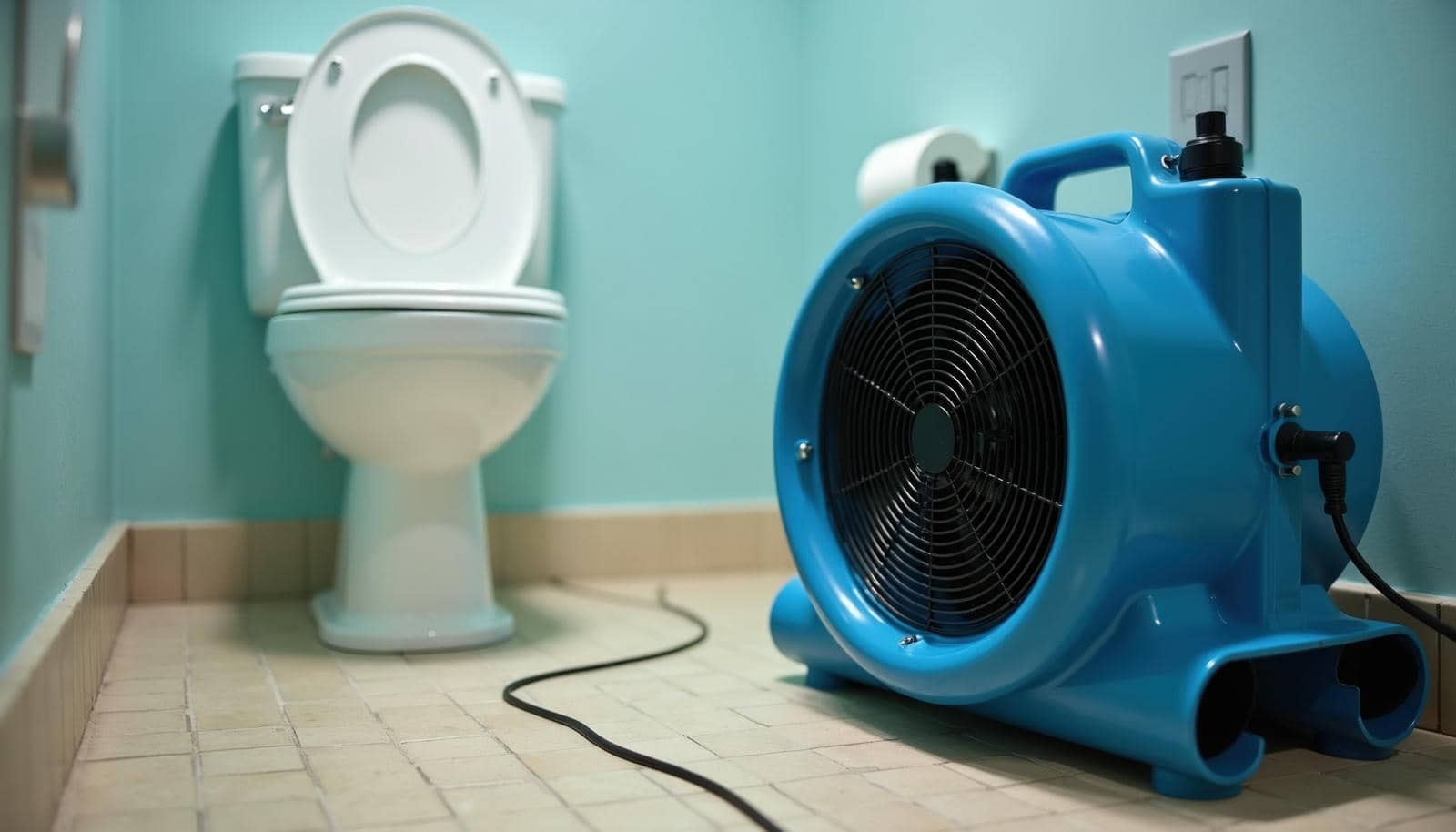
Now that the contaminated surfaces are disinfected, you need to dry the area completely to stop mold from taking hold. Open windows if weather allows, run fans to move air across floors and walls, and use a dehumidifier to pull moisture from the space.
Lift wet rugs, remove baseboards if needed, and separate damp items so air can reach hidden surfaces. Check corners, under cabinets, and inside closets, because trapped moisture undermines mold prevention.
Use drying techniques that keep airflow steady for 24 to 48 hours, then verify that surfaces feel dry and cool, not damp.
In this cleanup phase, you’re part of a team protecting your home’s health, and thorough drying helps everyone move forward with confidence.
Know When to Call Sewage Cleanup Pros
If the sewage backup covers a large area, keeps returning, or has soaked porous materials like drywall, insulation, or carpet padding, you should call sewage cleanup professionals right away.
You can’t fully sanitize deep materials with household tools, and sewage hazards spread fast through hidden cavities, baseboards, and HVAC paths.
Pros use containment, protective gear, extraction, antimicrobial treatment, and moisture monitoring to reduce health risks and prevent structural damage.
If you smell persistent odors, see contaminated water near outlets, or can’t identify the source, don’t wait.
You’re protecting your home and the people in it by choosing trained help.
Acting early helps your household recover faster, meet safety standards, and avoid costly remediation later.
Frequently Asked Questions
How Long Does Sewage Cleanup Usually Take?
Usually, you’ll need 1–3 days for sewage cleanup, though cleanup duration can extend with heavy contamination. You should prioritize health risks, ventilation, and disinfection, and you’ll feel better knowing professionals handle it quickly and safely.
Will My Insurance Cover Sewage Backup Damage?
Usually, you’re covered only if your insurance policy includes sewer backup coverage; standard policies often exclude it. Check coverage limits, deductibles, and endorsements, then file promptly with photos and receipts to support your claim.
Can I Salvage Furniture After Sewage Exposure?
You can sometimes salvage furniture after sewage exposure if contamination was brief and porous materials stayed dry. You’ll need professional furniture restoration, rapid disinfection, and water damage assessment; discard heavily soaked upholstery, particleboard, or anything odor-retaining.
How Soon Should I Report Sewage Damage to My Insurer?
Report sewage damage to your insurer immediately, ideally within 24 hours, so you can start the claim process and damage assessment quickly. You’ll protect coverage, support documentation, and keep your household’s recovery on track.
Do I Need Professional Testing After Cleanup?
Yes, you should get professional testing after cleanup, because lingering contamination can hide health risks. You’ll verify that cleanup methods worked, confirm safe surfaces, and protect everyone in your home or team before reentry.
Recap
When you face a sewage backup, act fast and follow the five steps: stop the flow, remove contaminated water and debris, disinfect every affected surface, dry the area thoroughly, and call professionals when the damage is extensive or keeps returning. Safety has to come first, because an ounce of prevention is worth a pound of cure. If you stay methodical and use proper protection, you’ll reduce health risks and restore your space more effectively.