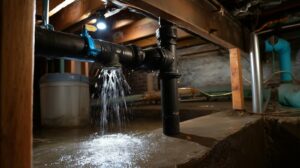
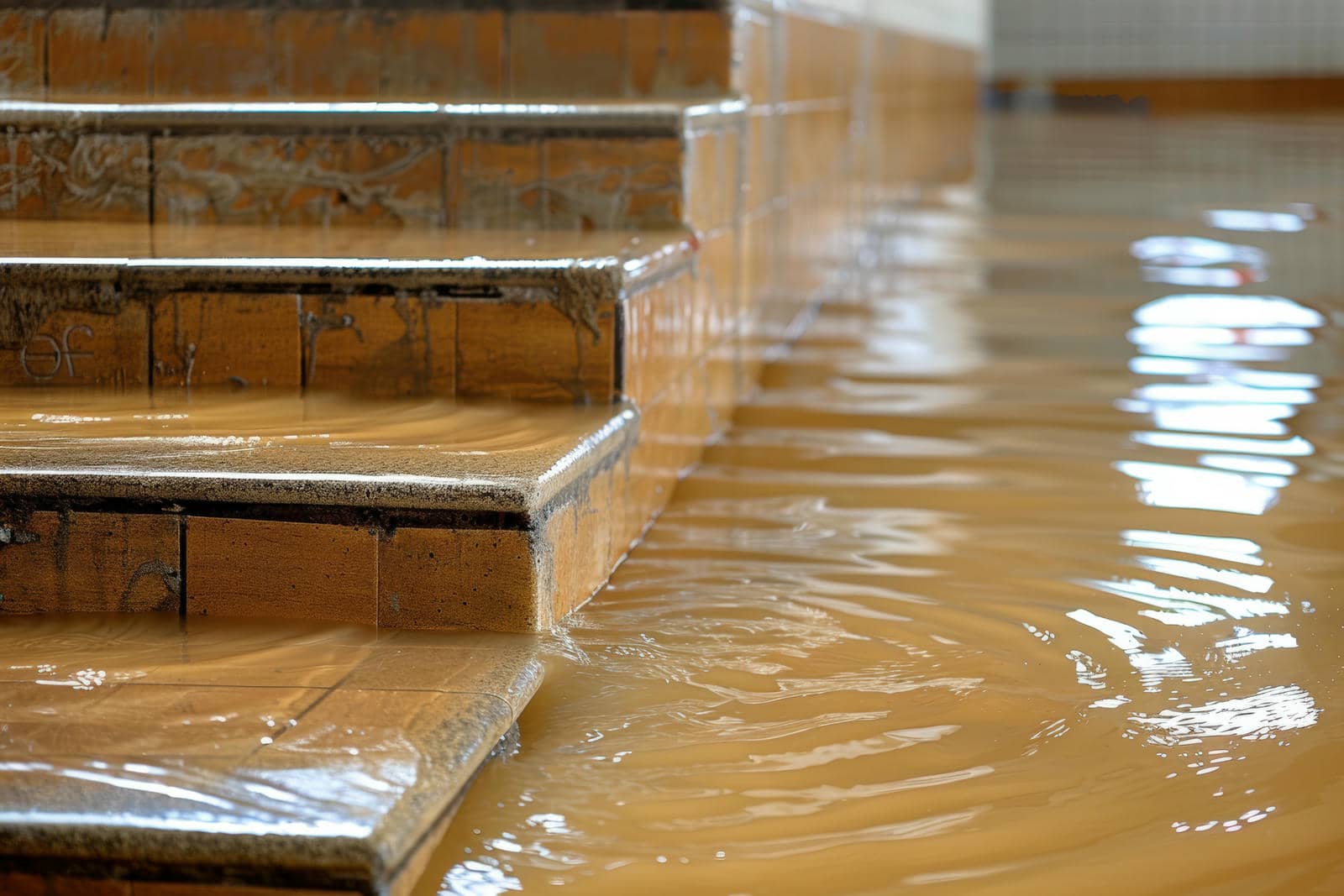
A flooded basement can feel like a stormy sea, overwhelming and chaotic. It’s crucial to navigate this basement flooding situation with care and precision. Start by ensuring your safety and evaluating the damage. What steps should you take first to protect yourself and your home? Let’s explore the critical actions that can help you regain control after the floodwaters recede.
Key Takeaways
- Turn off the main power supply and wear protective gear to ensure safety before entering the flooded area.
- Assess and document the damage with photos, noting any structural issues or cracks for insurance claims.
- Use appropriate water removal techniques, such as pumps and wet/dry vacuums, to extract water efficiently.
- Set up dehumidifiers and promote airflow to thoroughly dry the basement and prevent mold growth.
- Consider installing flood barriers and a sump pump to prevent future flooding and protect your property.
Assessing the Damage
After a hurricane, the first step you should take is to evaluate the damage in your basement.
Begin your damage assessment by checking for water intrusion and any signs of structural issues. Look for cracks in walls, floors, or the foundation, as these can compromise the structural integrity of your home. Document everything with photos and notes; this’ll be invaluable for insurance claims.
As you sift through the debris, be mindful of any mold growth, which can develop quickly in damp conditions. It’s essential to address these problems promptly to protect your home and your health.
If you notice significant damage or structural concerns, don’t hesitate to reach out to professionals for help. They can provide you with a thorough evaluation and guide you on the next steps.
Safety Precautions to Take
While evaluating the damage in your basement, it’s essential to prioritize safety. Flooded areas can pose serious risks, so take these precautions to protect yourself:
Check for electrical hazards: Before entering, turn off the main power supply to avoid electrocution. Water and electricity don’t mix.
Wear protective gear: Use boots, gloves, and masks to shield yourself from contaminants in the water and debris.
Keep an emergency kit handy: Verify your kit includes a first-aid kit, flashlights, batteries, and a whistle. You never know when you might need it.
Ventilate the space: Open windows and doors if it’s safe to do so, allowing fresh air to circulate and reducing mold risks.
Water Removal Techniques
Once you’ve confirmed your safety, it’s time to tackle the water in your basement.
Start by evaluating the amount of water—you’ll need to choose the right pump options based on that. For small amounts of water, a submersible pump can work wonders. If you’ve got a more significant flood, consider a gas-powered pump for faster extraction.
Next, explore extraction methods.
Wet/dry vacuums are excellent for smaller areas, allowing you to remove water efficiently. You might also want to use mops and towels for those hard-to-reach spots.
Drying and Dehumidifying the Space
With the water removed, the next step is to dry and dehumidify your basement effectively. This process is vital to prevent mold growth and ensure your space is safe.
Here’s how you can do it:
Use a Dehumidifier: Set up a dehumidifier to remove moisture from the air. This will speed up the drying process.
Enhance Air Circulation: Open windows and doors to promote airflow. Use fans to circulate air throughout the space.
Check for Wet Items: Remove any wet belongings, like carpets or furniture, to help the area dry faster.
Monitor Humidity Levels: Keep an eye on humidity levels using a hygrometer. Aim for a level below 60% for ideal results.
Taking these steps will dry your basement and create a healthier environment for you and your family.
You’ve got this!
Preventing Future Flooding
To prevent future flooding in your basement, it’s essential to take proactive measures that address potential vulnerabilities in your home.
Start by installing flood barriers around your property; these can effectively redirect water away from your basement during heavy rains. Consider adding a sump pump to your basement as well; this device can help remove excess water, ensuring that your space stays dry even in adverse conditions.
Regularly check your gutters and downspouts to verify they’re clear of debris, directing water away from your foundation. Additionally, inspect your basement walls for cracks and seal them to prevent water penetration.
It’s also wise to evaluate and improve your landscaping; sloping it away from your home can make a significant difference. By taking these steps, you’ll create a safer, more secure environment for your family, giving you peace of mind during stormy weather.
Recap
After dealing with hurricane basement flooding, you’ve taken vital steps to ensure safety and assess damage. Coincidentally, as you dry out your space, you might find an old family photo or treasured keepsake, reminding you of the importance of resilience. By removing water and preventing future flooding, you restore your basement and fortify your home against future storms. Stay vigilant, and remember that recovery is a journey, not just a destination.