After a flood, it’s vital to approach post-flood cleanup methodically. You’ll want to start by evaluating the damage and identifying any safety risks. This initial step sets the stage for effective recovery. Next, consider how to remove contaminated materials safely. Each phase of cleanup requires careful planning and execution to ensure your environment is safe and healthy. Let’s explore the essential strategies that can guide you through this challenging process.
Key Takeaways
- Conduct a thorough damage assessment and ensure safety by wearing protective gear and documenting damages for insurance claims.
- Remove contaminated materials promptly, separating hazardous waste for safe disposal while using gloves and masks.
- Thoroughly dry and dehumidify affected areas by maximizing air circulation and monitoring humidity levels between 30% and 60%.
- Clean and disinfect surfaces using heavy-duty cleaners and disinfectant mixtures, focusing on high-touch areas to prevent health risks.
- Implement preventive measures against mold growth by maintaining low humidity levels and using mold-resistant materials in the home.
Assessing the Damage and Safety Risks
As you begin the post-flood cleanup, evaluating the damage and safety risks is essential to ensure your safety and that of others.
Start by conducting a thorough damage evaluation of your property. Check for structural issues, such as cracks in walls or instability in flooring. Pay attention to electrical systems and appliances; water and electricity don’t mix. Document everything with photos for your records and insurance claims.
Next, implement safety precautions. Wear protective gear like gloves, masks, and boots to shield yourself from contaminants and debris. If you notice hazardous materials, such as mold or sewage, consider hiring professionals for safe removal.
Ascertain you have proper ventilation in affected areas to minimize health risks. By methodically evaluating and addressing these risks, you’ll foster a safer environment, paving the way for a more effective recovery process.
Your diligence now lays the groundwork for a successful cleanup.
Removing Contaminated Materials
Once you’ve assessed the damage, the next critical step involves removing contaminated materials to prevent further health risks.
Start by identifying contaminated debris, which can include damaged carpets, insulation, and drywall. These materials often harbor mold and bacteria, posing serious threats to your health and well-being.
Carefully separate hazardous waste from regular debris. Items like chemicals, batteries, or anything that may release toxins should be disposed of according to local regulations.
Use gloves and masks for protection while handling these materials.
It’s essential to work methodically, ensuring you don’t overlook any potential hazards. Dispose of contaminated items promptly and safely, as delays can lead to further contamination of your space.
By staying organized and attentive, you protect yourself and create a safer environment for everyone involved in the cleanup process.
Thorough Drying and Dehumidification
To effectively mitigate the risk of mold growth and structural damage, thorough drying and dehumidification must follow the removal of contaminated materials.
Start by ensuring maximum air circulation throughout the affected area. Open windows and doors to facilitate airflow, or use fans to enhance the drying process. The goal is to create an environment where moisture control remains a priority.
Next, deploy dehumidifiers to extract excess humidity from the air. Monitor humidity levels regularly, aiming for a range between 30% and 60%. This balance is essential for preventing mold spores from settling and proliferating.
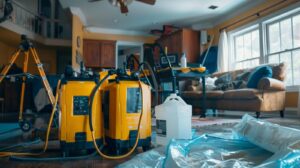
You might also consider professional-grade equipment, especially in larger spaces.
Remember, the longer moisture lingers, the greater the risk of damage and health hazards.
Cleaning and Disinfecting Affected Areas
Cleaning and disinfecting affected areas is essential for restoring your home after a flood. Start by gathering the right cleaning supplies, including gloves, masks, and heavy-duty cleaners.
Prioritize removing debris, mud, and contaminated items to prevent further damage. Use a mixture of water and a disinfectant to wipe down surfaces; make certain you follow the manufacturer’s instructions for effectiveness.
Pay special attention to high-touch areas like doorknobs, countertops, and appliances, as these can harbor harmful bacteria. When tackling flooring, consider using steam cleaning or high-temperature methods as effective disinfecting methods.
Don’t forget to ventilate the area while you work; open windows and use fans to circulate air. After cleaning, allow surfaces to dry completely to minimize future issues.
Preventing Future Mold Growth
Although it’s crucial to clean and disinfect after a flood, taking proactive measures to prevent future mold growth is equally important. Start by incorporating mold-resistant materials in your home. These materials can greatly reduce the risk of mold thriving in damp areas. For example, consider using mold-resistant drywall and paints, especially in basements and bathrooms.
Next, prioritize humidity control. Maintaining indoor humidity levels between 30% and 60% can create an environment where mold struggles to grow. Use dehumidifiers and verify proper ventilation in areas prone to moisture, such as kitchens and laundry rooms.
Regularly check and repair leaks from pipes or roofs to prevent moisture accumulation.
Frequently Asked Questions
How Long Does Post-Flood Cleanup Typically Take?
Post-flood cleanup duration varies, but you can expect it to take weeks to several months, depending on damage severity, resources available, and your community’s flood recovery efforts. Planning carefully will help streamline the process.
Can I Use Regular Household Cleaners for Flood Cleanup?
You can use regular household cleaners, but their effectiveness against flood contaminants varies. Always prioritize chemical safety considerations; some cleaners may not neutralize harmful bacteria or mold. Research alternatives for a safer, thorough cleanup.
What Protective Gear Should I Wear During Cleanup?
Wearing protective gloves and safety goggles is essential. Confirm you gear up properly to safeguard yourself while restoring your space and community.
How Do I File an Insurance Claim After a Flood?
To file your flood insurance claim, gather documentation of damages, complete the claim form, and submit it promptly. Follow up regularly with your insurer to ensure a smooth claim process and timely resolution.
Are There Professional Services for Flood Cleanup?
Yes, there are professional restoration services specializing in flood damage. While you might think it’s costly, investing in experts ensures a thorough cleanup and prevents future issues, giving you peace of mind and a sense of community support.
Wrap-Up
In the aftermath of a flood, your proactive steps can transform a chaotic scene into a safe haven. By meticulously evaluating damage and removing contaminated materials, you’re clearing the way for recovery. As you dry and disinfect, imagine the air becoming crisper, free from lurking dangers. Finally, with a focus on preventing mold growth, you’re not just restoring your space; you’re crafting a resilient environment that stands ready against future storms, ensuring peace of mind for you and your loved ones.